Affordable, Sustainable, Innovative Solutions for Liquid Silicone Rubber Manufacturing
Whether you're a startup looking to bring innovative products to market or an established manufacturer seeking to expand capabilities, understanding if an LSR machine fits your needs is crucial for making informed investment decisions.
The APSX-LSR injection molding machine delivers high performance at an affordable price, empowering businesses to easily innovate and quickly scale without compromising reliability or cost. With its compact footprint and exceptional value, the APSX-LSR is designed for those who need precision silicone manufacturing capabilities without the massive space requirements and prohibitive costs of traditional industrial equipment.
Let's explore the specific industries and applications where an LSR injection molding machine like the APSX-LSR becomes not just beneficial, but essential for success.

Medical Device Manufacturers: Where Precision Meets Biocompatibility
The medical device industry represents one of the largest and most demanding markets for LSR injection molding machines. Medical device manufacturers need LSR machines because of the unique properties that liquid silicone rubber offers for healthcare applications. LSR's biocompatibility, chemical resistance, and ability to withstand sterilization processes make it the material of choice for countless medical applications.
Medical device companies require LSR injection molding machines to produce components such as respirator masks, surgical instrument seals, drug delivery device components, and implantable device parts. Traditional manufacturing methods simply cannot achieve the consistency and quality that LSR injection molding provides.
The APSX-LSR machine's small footprint makes it ideal for medical device manufacturers who need to maintain cleanroom environments. Unlike massive industrial machines that require extensive facility modifications, the APSX-LSR can be integrated into existing medical manufacturing spaces without major infrastructure changes. This is particularly valuable for smaller medical device companies and startups that need to maintain FDA-compliant manufacturing capabilities while managing overhead costs.

Automotive Industry: Engineering Excellence Under Extreme Conditions
Automotive manufacturers and their suppliers represent another major market segment that benefits significantly from LSR injection molding machines. The automotive industry's need for LSR machines stems from the material's exceptional performance under extreme temperatures, chemical exposure, and mechanical stress that automotive components regularly encounter.
Modern vehicles contain hundreds of silicone components, from wire harness seals and connectors to gaskets, vibration dampeners, and sensor housings. These components must perform reliably in environments ranging from sub-zero winter conditions to the extreme heat of engine compartments. LSR's temperature endurance, maintaining its properties from minus 60 degrees Celsius to 180 degrees Celsius, makes it indispensable for automotive applications.
The rise of electric vehicles has created new opportunities and requirements for LSR components. EV battery systems require sophisticated sealing and insulation components that can handle high voltages while maintaining safety standards. LSR's excellent electrical insulating properties make it ideal for these applications, and manufacturers need dedicated LSR injection molding capabilities to produce these specialized components efficiently.
Automotive suppliers particularly benefit from the APSX-LSR machine's ability to handle both prototyping and production runs. The automotive industry's development cycles require rapid iteration of designs, followed by the ability to scale to production volumes quickly. The APSX-LSR's versatility allows suppliers to move seamlessly from prototype development to pilot production without requiring separate equipment investments.
The compact design of the APSX-LSR also addresses a common challenge in automotive manufacturing: space constraints. Many automotive suppliers operate in facilities where floor space is at a premium, and the ability to add LSR manufacturing capabilities without major facility expansion is a significant advantage. This is particularly important for Tier 2 and Tier 3 suppliers who need to offer LSR capabilities to remain competitive but cannot justify the space and cost requirements of traditional large-scale injection molding equipment.
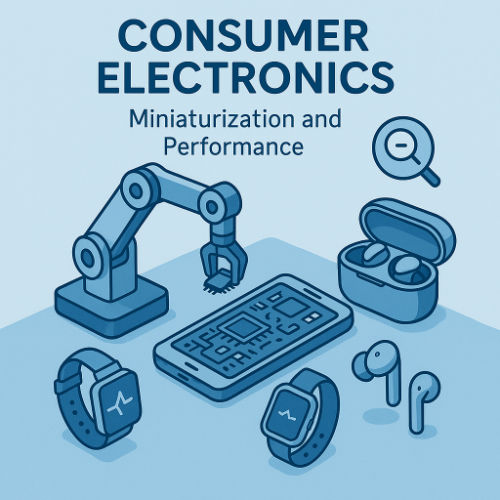
Consumer Electronics: Miniaturization and Performance
The consumer electronics industry has become increasingly dependent on LSR components as devices become smaller, more complex, and more demanding in terms of environmental resistance. Electronics manufacturers need LSR injection molding machines to produce seals, gaskets, keypads, and protective components that must perform reliably while occupying minimal space.
Modern smartphones, tablets, wearables, and other consumer electronics require waterproofing, dust resistance, and protection from environmental factors. LSR components provide these protective functions while maintaining the flexibility and durability needed for devices that are handled constantly. The precision molding capabilities of machines like the APSX-LSR enable the production of extremely thin-walled components with complex geometries that would be impossible to achieve with other manufacturing methods.
The rapid product development cycles in consumer electronics make in-house LSR manufacturing capabilities particularly valuable. Electronics companies need to iterate designs quickly, test prototypes extensively, and move to production volumes rapidly to meet market windows. Having an LSR injection molding machine like the APSX-LSR allows electronics manufacturers to maintain control over these critical timelines rather than depending on external suppliers who may not be able to accommodate urgent design changes or rush orders.
Additionally, the growing market for wearable electronics creates unique requirements for LSR components. Wearable devices must be comfortable against skin, hypoallergenic, and able to withstand exposure to sweat, cleaning products, and environmental conditions. LSR's biocompatibility and chemical resistance make it ideal for these applications, and manufacturers need dedicated molding capabilities to produce these specialized components efficiently.

Aerospace and Defense: Mission-Critical Reliability
The aerospace and defense industries represent specialized but highly valuable markets for LSR injection molding machines. These industries need LSR capabilities because of the extreme performance requirements and reliability standards that their applications demand. Components used in aircraft, spacecraft, and defense systems must perform flawlessly under conditions that would destroy conventional materials.
LSR's ability to maintain its properties across extreme temperature ranges makes it essential for aerospace applications. Aircraft components must function reliably from the sub-zero temperatures of high-altitude flight to the heat generated by engines and electronic systems. Similarly, spacecraft components must withstand the temperature extremes of space while maintaining their sealing and insulating properties.
Defense contractors and aerospace manufacturers often require the ability to produce components in relatively small quantities with extremely high quality standards. The APSX-LSR machine's capability to handle low-volume, high-precision production runs makes it ideal for these applications. Unlike high-volume automotive or consumer electronics production, aerospace and defense manufacturing often involves specialized components produced in quantities of hundreds or thousands rather than millions.
The compact footprint of the APSX-LSR also addresses security and facility requirements common in defense manufacturing. Many defense contractors operate in secure facilities where space is limited and equipment must meet specific security standards. The ability to add LSR manufacturing capabilities without major facility modifications is a significant advantage in these environments.

Food and Beverage Industry: Safety and Compliance
The food and beverage industry has increasingly recognized the value of LSR components for applications requiring food-grade materials that can withstand cleaning and sterilization processes. Food and beverage manufacturers need LSR injection molding machines to produce seals, gaskets, and components for processing equipment that must meet FDA standards while maintaining performance under demanding conditions.
LSR's tasteless and odorless properties, combined with its ability to be formulated to comply with stringent FDA standards, make it ideal for food contact applications. Components such as seals for processing equipment, gaskets for storage containers, and parts for dispensing systems all benefit from LSR's unique properties. The material's resistance to cleaning chemicals and ability to withstand repeated sterilization cycles make it particularly valuable in food processing environments.
Small and medium-sized food processors particularly benefit from the APSX-LSR machine's compact design and affordable price point. These companies often need food-grade components but cannot justify the investment in large-scale manufacturing equipment. The APSX-LSR provides access to LSR manufacturing capabilities at a scale and price point that makes sense for smaller operations.
The growing market for specialty food products and craft beverages also creates opportunities for custom LSR components. Craft breweries, specialty food processors, and artisanal manufacturers often need unique sealing and component solutions that are not available from standard suppliers. Having in-house LSR manufacturing capabilities allows these companies to develop and produce custom components that meet their specific requirements.

Product Design Agencies: From Concept to Reality
Product design agencies and innovation consultancies represent a growing market segment for LSR injection molding machines. These organizations need LSR capabilities because they frequently work with clients across multiple industries who require silicone components in their products. Having in-house LSR manufacturing allows design agencies to move quickly from concept to functional prototype to low-volume production without depending on external suppliers.
The product development process often involves multiple iterations of designs, with each iteration requiring functional prototypes for testing and evaluation. Traditional prototyping methods such as 3D printing cannot replicate the material properties of silicone, making it difficult to accurately test and validate designs that incorporate silicone components. An LSR injection molding machine like the APSX-LSR allows design agencies to produce functional silicone prototypes that accurately represent the final product's performance characteristics.
Design agencies working in the medical, consumer electronics, and wearable technology spaces particularly benefit from in-house LSR capabilities. These industries frequently require silicone components with specific performance characteristics that must be validated early in the design process. The ability to produce these components in-house accelerates the development timeline and reduces the risk of design issues being discovered late in the process.
The APSX-LSR's compact footprint and affordable price point make it accessible to design agencies that may not have the space or budget for traditional industrial equipment. This accessibility democratizes LSR manufacturing capabilities, allowing smaller design firms to compete with larger organizations by offering end-to-end development services that include functional silicone prototyping and low-volume production.

Education and Research Institutions: Training the Next Generation
Educational institutions and research organizations represent a specialized but important market for LSR injection molding machines. These organizations need LSR capabilities to provide hands-on training for students in manufacturing technologies, materials science, and product design. They also require LSR equipment for research into advanced materials, manufacturing processes, and product development methodologies.
Technical colleges, universities with engineering programs, and specialized manufacturing training centers all benefit from having LSR injection molding capabilities. The growing importance of silicone components across multiple industries makes experience with LSR manufacturing a valuable skill for students entering the workforce. Institutions that can provide hands-on training with LSR equipment produce graduates who are better prepared for careers in medical device manufacturing, automotive component production, and other industries that rely heavily on silicone parts.
The compact size and affordable price point of the APSX-LSR make it accessible to educational institutions that may have limited space and budget constraints. Unlike traditional industrial equipment that requires dedicated facilities and substantial infrastructure, the APSX-LSR can be installed in existing laboratory spaces with minimal modifications. This accessibility allows more institutions to incorporate LSR manufacturing into their curriculum and research programs.
Educational institutions also benefit from the APSX-LSR's user-friendly interface and comprehensive documentation. These features make it easier for instructors to teach students the fundamentals of LSR manufacturing without requiring extensive specialized knowledge. The machine's safety features also make it suitable for educational environments where student safety is a primary concern.

Startups and Entrepreneurs: Democratizing Manufacturing
Startups and entrepreneurs developing products that incorporate silicone components represent an emerging market for LSR injection molding machines. These organizations need LSR capabilities because they often cannot afford the high minimum order quantities and long lead times associated with outsourcing silicone component production. Having in-house LSR manufacturing allows startups to iterate designs quickly, produce small batches for market testing, and scale production gradually as demand grows.
The startup ecosystem in medical devices, wearable technology, and consumer products has seen significant growth in recent years. Many of these startups develop products that require silicone components for their unique properties. Traditional manufacturing approaches often create barriers for these startups, as contract manufacturers may not be interested in low-volume production or may charge prohibitive setup fees for small runs. The APSX-LSR machine removes these barriers by making in-house LSR manufacturing accessible and affordable. Crowdfunded product launches have become a common path to market for hardware startups. These campaigns often require the ability to produce small batches of products for early backers before scaling to larger production volumes. Having in-house LSR manufacturing capabilities allows startups to fulfill these initial orders without committing to large production runs that may require substantial capital investment. This flexibility is particularly valuable for startups operating with limited funding and uncertain demand forecasts.
The compact footprint of the APSX-LSR makes it suitable for the shared workspaces and small facilities that many startups operate from. Unlike traditional manufacturing equipment that requires dedicated industrial space, the APSX-LSR can be installed in maker spaces, incubators, and small workshop environments. This accessibility allows startups to bring manufacturing in-house earlier in their development, reducing dependence on external suppliers and improving control over product quality and timelines.
The APSX-LSR's affordability also aligns with the capital constraints that most startups operate under. Rather than committing large portions of their funding to outsourced manufacturing or expensive equipment, startups can invest in in-house capabilities that provide long-term flexibility and cost advantages. This approach allows startups to allocate more resources to product development, marketing, and other critical business functions while maintaining control over their manufacturing processes.
Conclusion: The Versatility of LSR Injection Molding
The diverse range of industries and applications discussed above demonstrates the extraordinary versatility and value of LSR injection molding machines. From medical device manufacturers requiring biocompatible components to automotive suppliers producing parts that withstand extreme conditions, the need for LSR capabilities spans numerous sectors and applications.
The APSX-LSR injection molding machine addresses this need with a solution that combines affordability, compact design, and high performance. Its accessibility makes LSR manufacturing capabilities available to organizations that previously could not justify the cost and space requirements of traditional industrial equipment. This democratization of manufacturing technology enables innovation across industries and organization sizes, from startups and educational institutions to established manufacturers and service providers.
Whether you're a medical device startup developing innovative healthcare solutions, an automotive supplier adapting to the electric vehicle revolution, or a product design agency bringing creative concepts to life, an LSR injection molding machine like the APSX-LSR provides the manufacturing capabilities needed to succeed in today's competitive marketplace. The question is not who needs an LSR injection molding machine, but rather, who can afford to be without one as silicone components become increasingly central to product design and performance across industries.
The APSX-LSR represents more than just manufacturing equipment—it's an investment in capability, control, and competitive advantage. By bringing LSR manufacturing in-house, organizations gain the flexibility, speed, and quality control needed to innovate rapidly and respond effectively to changing market demands. In an era where manufacturing agility is increasingly critical to success, the APSX-LSR provides a solution that empowers organizations to take control of their silicone component production and unlock new possibilities for product design and development.